When a customer lifts the lid of a box, that moment shapes how they feel about everything inside it. Packaging has quietly become as important as the product itself. This holds true for luxury jewellery brands, corporate gifting companies, and event planners across Thailand and beyond. A flawless ring or gift set can still fall flat if it arrives in flimsy, generic packaging. This is exactly why luxury packaging boxes have become the choice for brands. They want every unboxing moment to feel intentional and memorable.
Why Fabric-Covered Boxes Outperform Standard Packaging
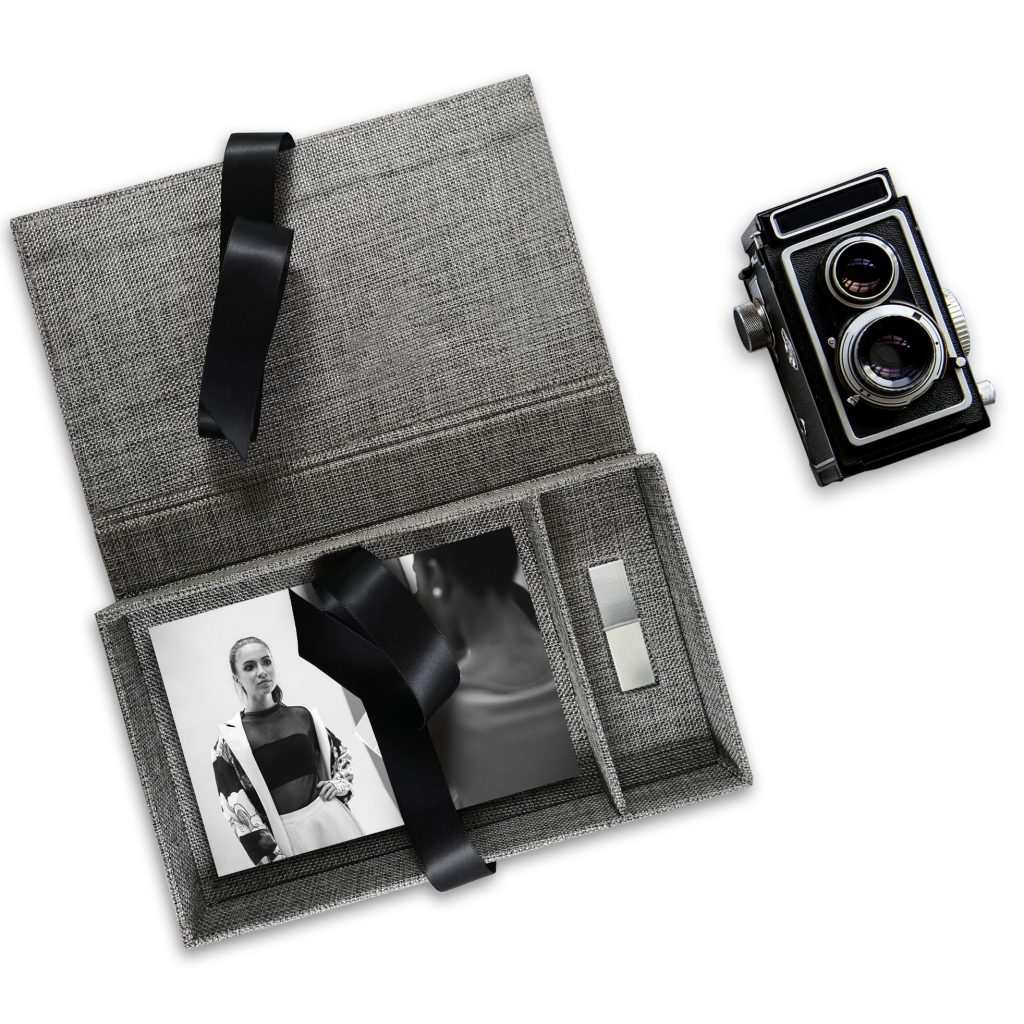
Most mass-produced gift boxes rely on printed cardboard or laminated paper finishes. They do the job, but they rarely create an emotional response. Fabric-covered boxes work differently. The moment someone touches velvet, linen, or silk stretched over a sturdy frame, their perception of the product shifts immediately. Texture communicates value in a way that flat, glossy print simply cannot.
This is particularly true for luxury jewellery brands, where packaging often becomes part of the product’s identity. A velvet-wrapped ring box signals craftsmanship before the customer even sees what’s inside. Corporate gifting follows a similar logic. A leather-covered box presented at a Thai corporate event tells a different story. It shows recipients that the company invested real thought into the gesture.
The Materials That Define Luxury Packaging Boxes
Choosing the right fabric covering is one of the most important decisions in designing a premium box. Each material brings its own character, durability, and price point. This makes material selection a meaningful part of any brand’s packaging strategy.
Velvet
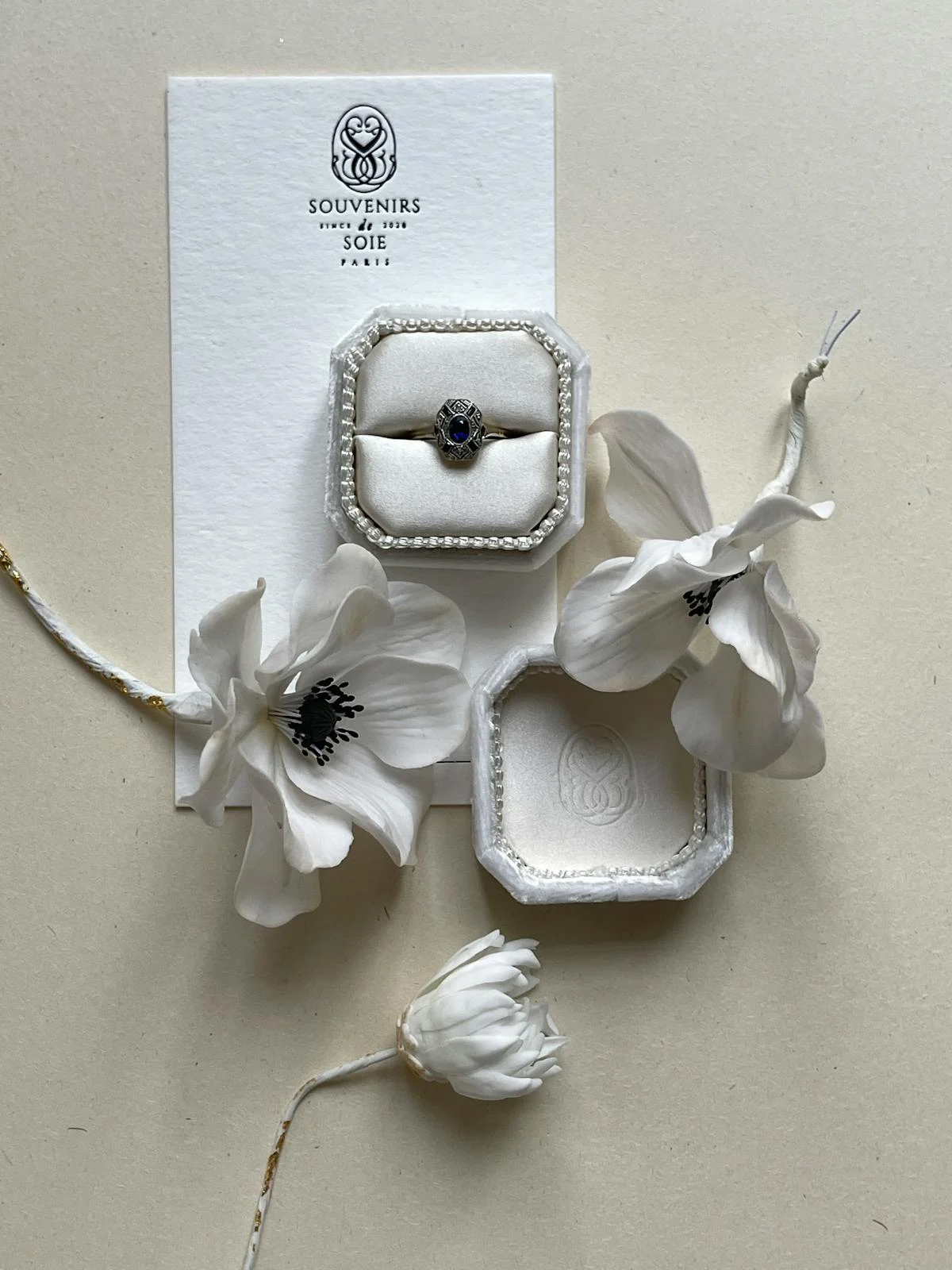
Velvet remains one of the most popular choices for jewellery and high-end gift boxes. Its soft pile catches light beautifully, and it pairs naturally with metallic foil branding. Velvet-covered boxes feel substantial in the hand. This is exactly the sensation jewellery brands want customers to associate with the product inside.
Silk
Silk, particularly when sourced and woven locally in Thailand, offers a smoother, more refined finish than velvet. Silk-covered boxes often suit brands aiming for a modern, understated look. Silk also takes colour exceptionally well. This allows for vibrant, brand-accurate hues that hold up over time.
Leather
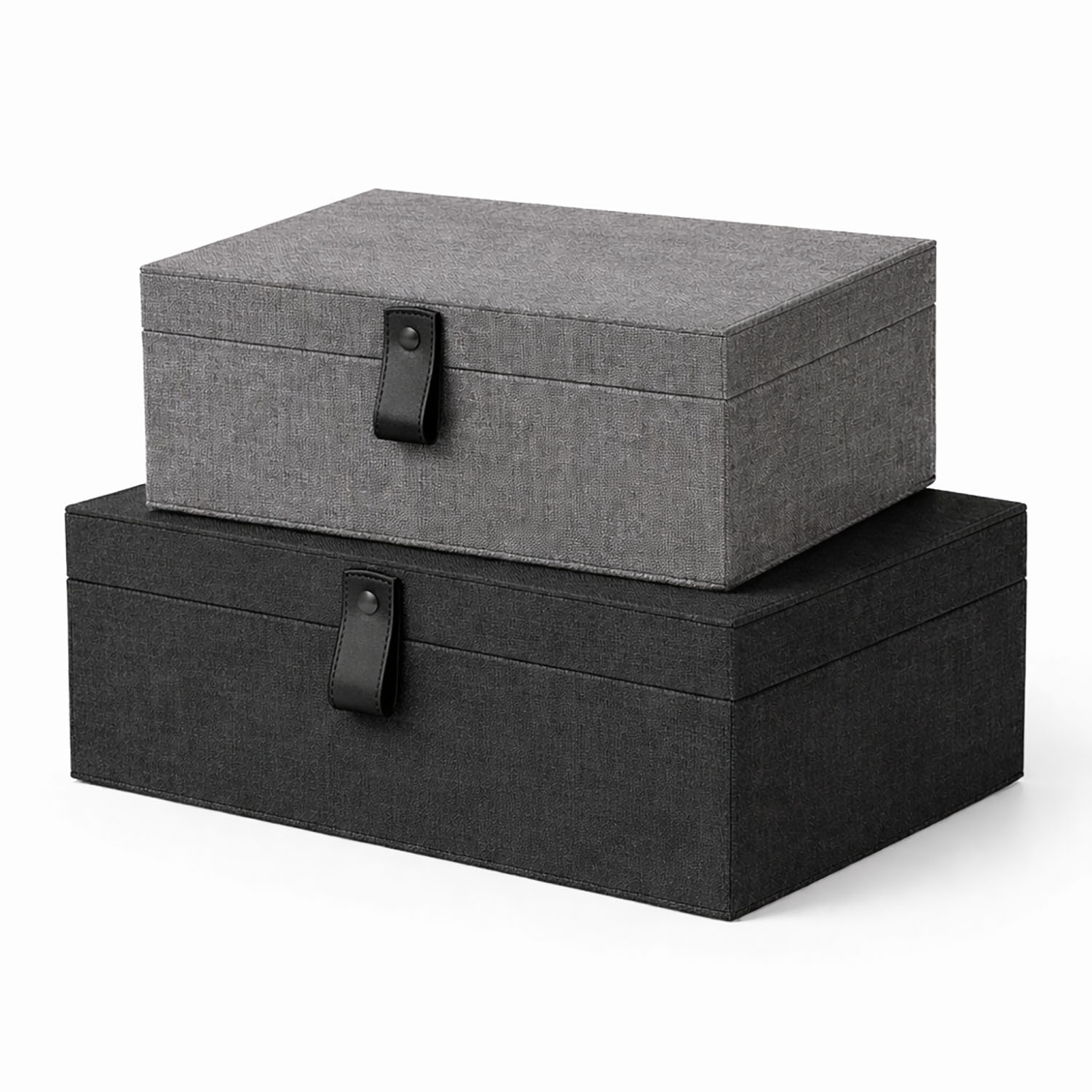
Leather brings a more masculine, corporate edge to packaging. It suits executive gift sets, premium stationery boxes, or branded gifts for business clients. Leather ages well and develops a natural patina over time. It also pairs beautifully with laser engraving, which we’ll cover shortly.
Linen
Linen offers a more relaxed, natural aesthetic. Brands focused on sustainability or artisanal positioning often choose linen-covered boxes. The fabric’s visible weave communicates handmade quality without feeling overly formal. Linen also suits eco-conscious jewellery brands that want their packaging to match their product values.
Paper
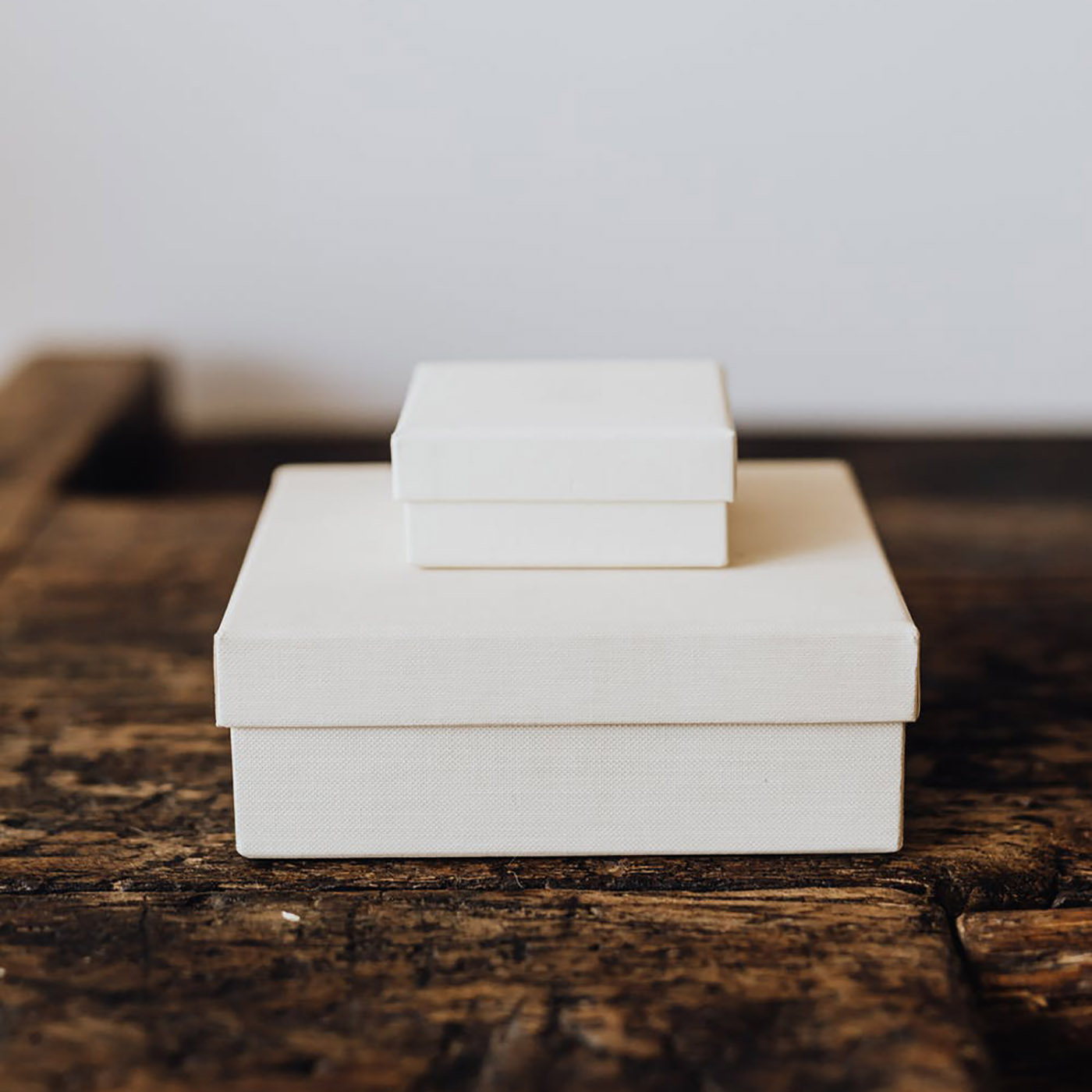
Paper-covered boxes, while simpler than fabric options, still play an important role in luxury packaging when finished correctly. A high-quality textured or matte paper achieves a refined look when paired with thoughtful foil work. This makes it a smart choice for brands scaling up their corporate gifting programmes.
Each of these materials can be sourced, cut, and applied entirely by hand. This handcraft process separates true luxury packaging boxes from machine-laminated alternatives. It allows for tighter corners and seamless fabric transitions.
Gold Foil Stamping: Small Detail, Big Impact – Luxury Packaging Boxes
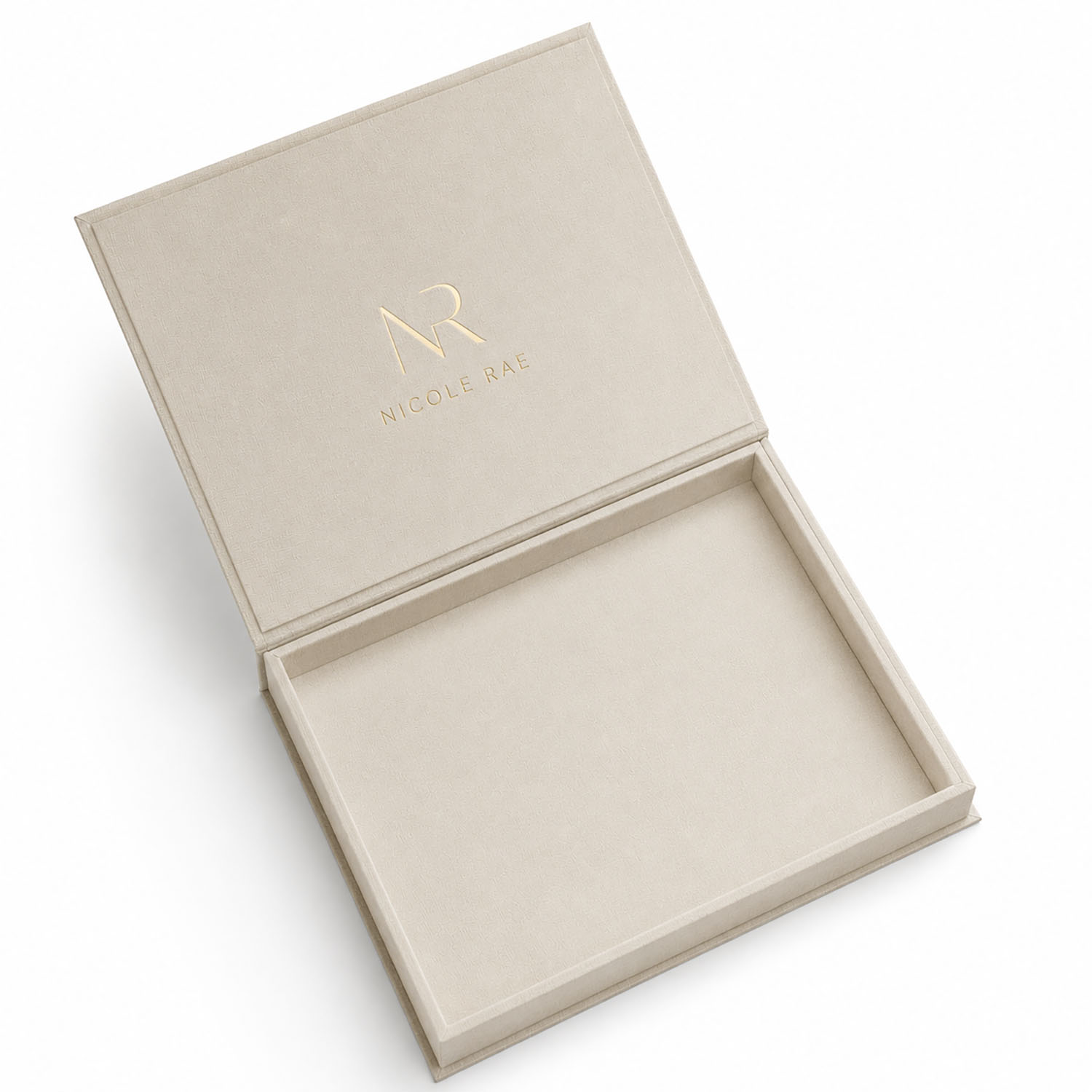
If fabric covering sets the foundation for a luxury box, foil stamping often completes the picture. Gold foil stamping has remained a timeless branding technique. It adds a reflective, dimensional quality that flat printing cannot achieve.
For jewellery brands, a gold-foiled monogram on a velvet or silk box creates an immediate sense of prestige. The metallic finish catches light from multiple angles, drawing the eye toward the branding. Foil stamping isn’t limited to gold, either. Rose gold, silver, copper, and matte black foils all let brands match their packaging to their visual identity.
Foil stamping also works well for personalisation. Many jewellery brands and corporate gifting companies request individual names or short messages on boxes. This suits weddings and VIP client gifts particularly well. Foil stamping is a precision process, so even intricate logos transfer cleanly onto fabric surfaces. That’s harder to achieve with standard screen printing.
Laser Engraving: A Modern Alternative for Texture-Rich Branding
While foil stamping suits fabric and paper surfaces, laser engraving has become the preferred technique for leather-covered boxes. It also works well on certain wood elements. Rather than applying a material on top of the surface, laser engraving etches directly into it. This creates a permanent, tactile mark that won’t fade or peel over time.
This makes laser engraving well-suited to corporate gifting. Brands want their logo to stay visible for years, not just for the first unboxing. A laser-engraved logo on a leather box lid feels intentional and premium. It also pairs well with minimalist branding that relies on clean lines rather than colour.
Laser engraving opens up creative possibilities beyond simple logos. Brands can engrave intricate patterns or Thai-inspired motifs that complement an event’s theme. For Thai corporate events specifically, this often means weaving in subtle cultural elements. The result is gifts that feel locally rooted rather than generic.
Why Wholesale Brands Are Investing in Handcrafted Packaging
Luxury packaging boxes used to be reserved for small, bespoke runs. Today, more wholesale jewellery brands and event planners source these boxes at scale. They do this without sacrificing the handmade quality that makes the boxes special.
This shift makes sense from a business perspective. As online jewellery sales and corporate gifting programmes grow, brands need packaging that performs well in person and on camera. A velvet or silk box simply photographs better than a printed cardboard alternative. This has real value for brands building a visual identity across e-commerce and social platforms.
Wholesale sourcing also helps brands maintain consistent quality across hundreds or thousands of units. This matters enormously for corporate clients ordering gifts for large events or recognition programmes. A factory experienced in handcrafted fabric packaging can manage every step under one roof. This includes cutting, assembly, foil stamping, and laser engraving, keeping quality consistent from the first box to the last.
Choosing the Right Box for Your Brand
For jewellery brands, the decision often comes down to matching the box material to the product line. Fine jewellery typically pairs well with velvet or silk. Casual or contemporary collections might suit linen or a textured paper finish better. For corporate gifting, leather and linen tend to perform well across a wide range of recipients. They read as professional rather than overly decorative.
Event planners working on weddings or large corporate functions in Thailand often request a combination approach. This might mean a fabric-covered box with foil-stamped initials, paired with a ribbon closure. Some clients also add an interior compartment for keepsakes. This blend of material, finish, and structural design is where handcrafted packaging truly shines.
Final Thoughts
Luxury packaging boxes have moved well beyond niche, ultra-premium use cases. Jewellery brands, corporate gifting companies, and event planners increasingly recognise this shift. Packaging is now an extension of the product itself, not an afterthought. Whether covered in velvet, silk, leather, or linen, and finished with gold foil stamping or laser engraving, these boxes do more than just hold a product. They become part of the brand experience.
For wholesale buyers, the opportunity lies in sourcing a manufacturing partner who can combine handcraft techniques with consistency. Larger orders demand exactly that balance. When it’s achieved, every box leaving the factory carries the same elegant, unique quality. This holds true whether it’s one of ten or one of ten thousand.